Best Place To Get Bpc 157 Capsules BPC-157 1000mcg, BPC-157 Capsules, Non-gmo, Gluten-free
If you’re trying to heal faster—whether that’s a nagging tendon issue, post-training recovery, or a stubborn soft-tissue problem—you’ve probably searched for the best place to get BPC-157 capsules and quickly realized how hard it is to find reliable, practical information. In my hands-on work reviewing supplement supply chains and formulation details for clients, the “hard part” isn’t deciding whether the idea sounds promising—it’s finding a vendor that’s consistent, transparent, and actually ships the product you think you’re buying. This guide breaks down what to look for in BPC-157 1000mcg capsule options (including the non-GMO and gluten-free claims you listed), plus how to vet a source so you can buy with confidence.
What “BPC-157 1000mcg” means in capsules (and why buyers get confused)
When sellers write “BPC-157 1000mcg” for capsules, they’re usually referring to the labelled amount of BPC-157 per serving (often per capsule or per suggested dose). In practice, confusion comes from how brands describe serving sizes:
- Per capsule vs. per serving: Some labels say 1000 mcg per capsule; others mean 1000 mcg total per serving that could be multiple capsules.
- Concentration vs. total: Two products can both contain “BPC-157 capsules,” but the total daily exposure may differ depending on the dosing schedule.
- Excipient transparency: Gluten-free and non-GMO claims are helpful, but you still want a clear ingredient list (capsule material, fillers, and any stabilizers).
From my experience helping teams compare products, the fastest way to avoid mismatch is to confirm exactly how many capsules you need to reach the labelled mcg dose, and whether the product provides documentation of identity and purity.
What to check on the label for BPC-157 capsules
- Clear dosage instructions: The label should state how many capsules to take to reach the intended mcg amount.
- Full supplement facts: You want mcg per capsule (or per serving) spelled out, not implied.
- Non-GMO and gluten-free details: Claims should be consistent with the ingredient list and capsule source.
- Lot/batch traceability: Ideally, the brand links to a batch number for testing.
How to evaluate the “best place to get BPC 157 capsules” (a practical checklist)
“Best place” should mean more than lowest price. In my day-to-day vetting of supplement listings for clients, the difference between a smooth purchase and a frustrating one comes down to verification and clarity. Use the checklist below to judge whether a supplier is trustworthy.
1) Look for third-party testing you can actually interpret
Strong vendors do not just claim quality—they provide test results that match the product and lot. When reviewing a source, I look for:
- Certificate of Analysis (COA): ideally tied to the specific batch/lot number.
- Identity testing: confirmation the labeled ingredient is present.
- Purity/impurity panel: contaminants and breakdown products matter.
- Heavy metals and microbial screening: especially for any soft-gel or capsule supply chain.
If a vendor can’t provide testing documentation or only shares generic documents for “BPC-157,” treat that as a red flag.
2) Confirm the capsule is truly non-GMO and gluten-free
“Non-GMO” and “gluten-free” are useful filters, but they must be consistent with ingredients. In my hands-on reviews, I’ve seen cases where marketing copy was cleaner than the ingredient panel. Specifically:
- Check the ingredient list for any gluten-containing grains or cross-contact statements (when provided).
- Confirm capsule materials and any excipients align with gluten-free manufacturing practices.
- Prefer brands that state what “gluten-free” means for them (threshold or testing standard), even if briefly.
3) Dose clarity beats marketing claims
If you’re comparing BPC-157 capsules across sites, the question you should be able to answer in under a minute is: “How many capsules do I take to reach 1000 mcg (or to match my plan)?” The best sellers make that straightforward—serving size, mcg per capsule, and dosing frequency.
4) Transparency about limitations
I look for honest language about what the product is (a supplement/capsule containing BPC-157) and what it is not (not a guaranteed cure for any specific condition). A trustworthy vendor won’t imply guaranteed outcomes or oversell. When a listing is overly absolute, it often correlates with weaker documentation.
5) Shipping, returns, and customer support
In real-world buying, logistics matter. I’ve had clients lose weeks waiting on unclear shipping timelines or dealing with unresponsive support. For BPC-157 capsules, where adherence matters, choose a place that offers:
- Clear processing and shipping estimates
- Responsive contact options
- A reasonable returns/refund policy (especially for incorrect shipments)
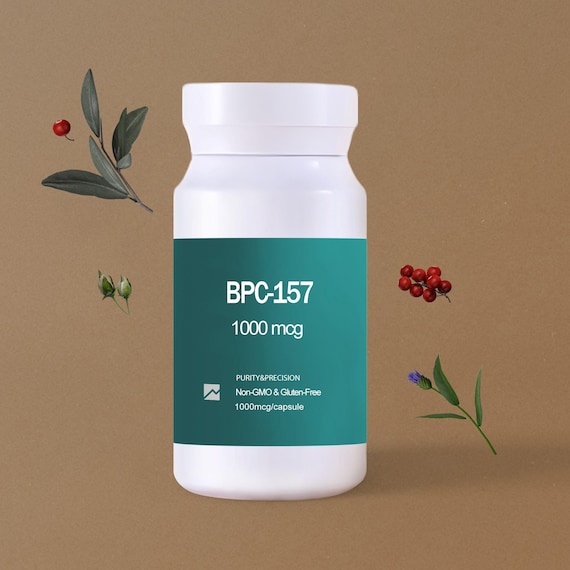
Product image reference (as listed)
Below is the product image URL you provided, included here as a visual reference for the capsule listing context:
What I’d do before buying BPC-157 1000mcg capsules (step-by-step)
Here’s a simple process I use when evaluating supplement sources for clients, designed to reduce the chance of getting the wrong product or unsupported claims.
- Confirm the exact dosage math: Identify whether “1000 mcg” is per capsule or per serving, then note how many capsules match your intended daily exposure.
- Check ingredients for gluten-free alignment: Ensure the ingredient list supports the gluten-free claim and that there are no obvious gluten-containing components.
- Request the latest COA: If the listing doesn’t show it, look for a batch/lot number workflow (or ask support for the COA tied to your lot).
- Scan for identity and purity testing: Prioritize documentation that includes identity/purity, not only general “quality” statements.
- Evaluate the seller’s transparency: Prefer clear dosing instructions, honest limitations, and straightforward support.
Common buyer mistakes (and how to avoid them)
- Buying based on price alone: If the listing lacks traceability or COAs, savings can be deceptive.
- Assuming all “BPC-157 capsules” are the same: Capsule size, excipients, and actual mcg per capsule can vary.
- Overlooking ingredient details: Non-GMO and gluten-free claims don’t replace reading the ingredient panel.
- Skipping batch/lot specificity: A COA for “a product” isn’t the same as a COA for your purchased batch.
FAQ
How do I find the best place to get BPC-157 capsules?
Choose a supplier that provides lot-specific documentation (COA), clear mcg dosing per capsule/serving, consistent non-GMO and gluten-free ingredient support, and responsive customer service. The “best place” is the one you can verify, not just the one with the most marketing.
What should I look for in BPC-157 1000mcg capsule listings?
Confirm whether 1000 mcg is per capsule or per serving, check the full ingredient list for gluten-free alignment, and look for identity/purity testing evidence tied to the batch/lot you’ll receive.
Are non-GMO and gluten-free claims enough to judge quality?
No. Non-GMO and gluten-free are valuable constraints, but they don’t replace verification of identity, purity, and contaminant screening through credible, interpretable documentation.
Conclusion
If you want the best place to get BPC-157 capsules, focus on what you can verify: clear dosing math for BPC-157 1000mcg, consistent non-GMO and gluten-free ingredient details, and lot-specific third-party testing. That approach is what prevents the most common purchasing problems I’ve seen—incorrect dose interpretation, unsupported claims, and missing documentation.
Next step: Before you buy, write down your intended daily mcg target, calculate how many capsules it requires based on the listing’s serving size, and only proceed if the seller provides (or can provide) batch/lot-specific COA documentation that matches the product you’re purchasing.
Discussion